excl VAT

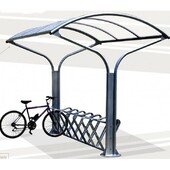
Bicycle shelters are becoming an increasingly important element of modern urban infrastructure. With the growing popularity of cycling, more and more cities, businesses and institutions are investing in convenient, aesthetic and secure places to store bicycles. A bicycle shelter not only protects a bike from weather conditions or theft, but also contributes to a tidy, harmoniously designed environment.
What is a bicycle shelter?
A bicycle shelter is a special structure designed for storing bicycles outdoors. Its main purpose is to protect the vehicle from adverse weather like rain, snow, hail or strong sunlight. The shelter also helps ensure protection from potential theft, as bike racks inside allow bicycles to be secured with personal locks or chains.
Shelters can be open, semi-closed, or fully enclosed, with walls made of different materials such as glass, steel, wood, aluminium or polycarbonate. They can be freestanding or mounted as modular units attached to other buildings, for example building facades or public transport stops.
Where are bicycle shelters most commonly installed?
Bicycle shelters are widely used in places with high bicycle traffic. Common installations include:
Schools, universities, and other educational institutions
Office buildings, business centers, and factories
Shopping malls, stores, and commercial zones
Municipal buildings and public sector facilities
Residential neighborhood courtyards, parks, and recreational areas
Train stations, bus stops, and park‑and‑ride zones
Main advantages of bicycle shelters
Weather protection
Bicycles are sensitive to corrosion caused by moisture, as well as damage to plastic and rubber parts due to heat or cold. A shelter allows you to safely leave a bike even in bad weather – in rain, snow or under intense sun.
Protection from theft
Bicycle shelters often have racks inside, where vehicles can be locked with padlocks or chains. Enclosed shelters may also have access control systems, such as RFID cards or coded locks, restricting access to authorized users only.
Aesthetics and orderliness
Shelters help maintain a clean and organized bicycle parking area. Instead of leaving bikes anywhere, users have a dedicated place. Architecturally designed shelters can also enhance the appearance of a city or institution.
Encourages sustainable mobility
Investment in bicycle parking infrastructure directly encourages people to use this mode of transport daily. This reduces dependence on cars, improves air quality, lowers noise pollution, and contributes to healthier lifestyles.
Adaptation to individual needs
Bicycle shelters can be custom made. You can choose materials, colours, dimensions, roof styles, number of racks, lighting, signage, or even space for advertising. Such solutions are especially relevant for companies or public institutions aiming for a representative look.
Manufacture, materials, and maintenance
Modern bicycle shelters are made from durable, long‑lasting and low‑maintenance materials. Most commonly used are galvanized or powder‑coated steel, stainless steel, aluminium, tempered glass, polycarbonate, or long‑lasting wood. All components are adapted for year‑round outdoor use. Some shelters are equipped with LED lighting, rainwater collection systems or solar panels.
What we offer
In our range you will find bicycle shelters of various sizes and designs, suitable for both public and private projects. We can offer:
Standard models for quick installation
Modular systems for larger bicycle parking areas
Custom solutions according to architectural plans
Additional accessories: roofs, lighting, locking systems
All our shelters meet EU quality standards. They are easy to assemble and can be delivered across Lithuania or exported to other countries.
Want to learn more?
Contact us—we will help you choose the most suitable shelter for your project, provide technical drawings, visualisations, and offer transport and installation solutions. Choose sustainability, convenience and quality—bicycle shelters are more than just accessories, they are an important investment in modern mobility culture.